
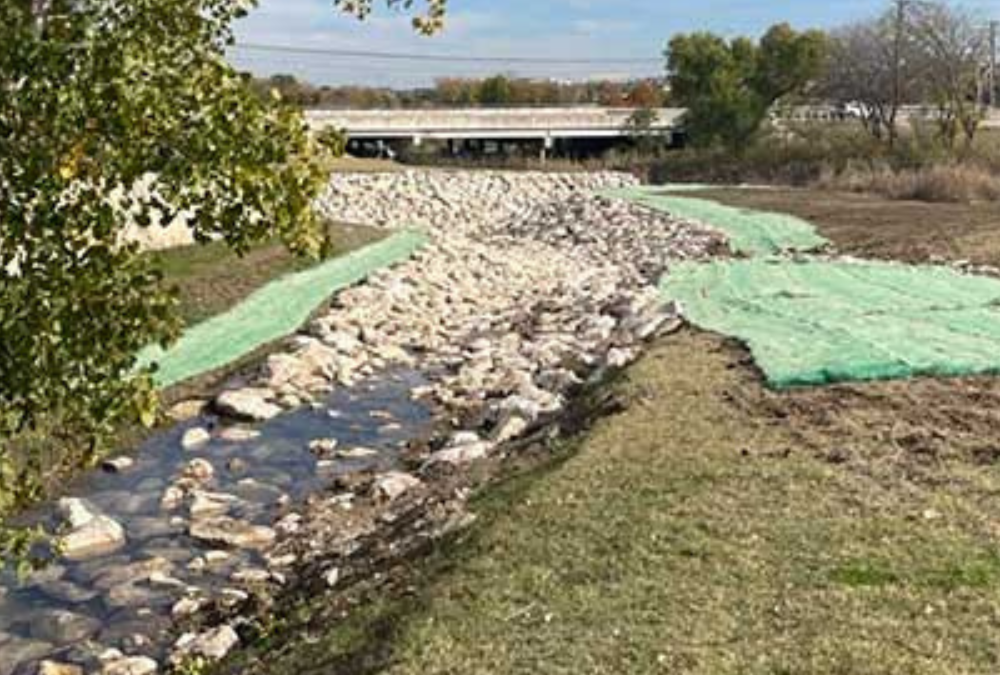
If you’ve ever seen a gentle, grassy dip in the landscape that seems to capture rainwater, you might be looking at a swale!
Think of it as nature’s way of managing water. A drainage swale is a shallow, often curvy channel filled with plants that helps direct runoff, soaking up rainwater and preventing erosion.
Swales aren’t just functional — they can also add beauty to your yard or garden. By creating these lush, green spaces, we can help our environment while enjoying the benefits of a vibrant landscape.
In this piece, we’ll take a closer look at what drainage swales are, why they’re important, and how they can enhance both our surroundings and our communities. We’ll also answer whether you should include a swale in your Houston landscaping plan.
What is a Swale in Landscaping?
A typical swale for a home is a gently sloping, shallow channel designed to manage water runoff and promote infiltration.
Here’s what you might find:
- Shape and Size: Swales are usually elongated and can vary in size based on the area they serve. They often have a slight curve, which helps slow down water flow and allows for better absorption.
- Vegetation: The bottom and sides of the swale are typically planted with native grasses, wildflowers, or other drought-tolerant plants. These plants help stabilize the soil, absorb excess water, and provide habitat for pollinators and other wildlife.
- Mulch and Soil: A layer of mulch or organic matter may cover the bottom to enhance water retention and improve soil quality. The soil is often well-aerated and may be amended to support healthy plant growth.
- Location: Swales are often strategically placed to intercept runoff from roofs, driveways, or other impervious surfaces, directing water to the swale rather than letting it flow directly into storm drains.
- Maintenance: Regular maintenance involves checking for erosion, removing debris, and ensuring that plants are healthy. Occasional mowing or trimming may be needed to keep the vegetation in check.
Overall, a well-designed swale not only helps manage surface water, but also enhances the aesthetic appeal of a home’s landscape, creating a more sustainable and inviting environment.
Here’s a deeper dive into swale terminology.
Note: In the Houston area, we experience seasonal moisture changes that can negatively affect your home’s structure. A swale can help with this as well.
Quick note: What is a Swale vs. Ditch
A swale drainage system is a shallow, vegetated channel designed to manage stormwater runoff by promoting infiltration and filtering pollutants, often featuring plants that enhance the landscape.
Swales are often integrated into landscape designs and can be found in gardens, parks, or residential areas, working with the natural contours of the land.
In contrast, a ditch (or drainage ditch) is a deep, typically bare channel with steeper sides. It is used primarily for drainage, directing excess water away from an area without focusing on aesthetics or ecological benefits. They are primarily functional.
Both seals and ditches can be effective in conveying water away from your foundation.
It is important to consider stormwater and runoff, as this can damage your foundation. A swale might be the best way to address these issues, along with additional ways to install yard drainage systems.
The Benefits of Swale Drainage Around Your House
Swale drainage around a house is an effective way to manage rain runoff and prevent flooding in the yard.
By creating a gently sloping, vegetated channel, swales capture excess water from roofs, driveways, and other hard surfaces, allowing it to slowly soak into the ground. They also move standing water away from areas where it can cause damage.
This not only reduces erosion and runoff, but also helps replenish groundwater. The plants in the swale absorb water, filter pollutants, and provide a natural habitat, which makes it a sustainable and attractive feature in residential landscaping.
- Flood Prevention: Swales effectively capture and manage stormwater runoff, reducing the risk of flooding around the home and preventing water from pooling in unwanted areas (which may amplify house settling).
- Soil and Water Quality Improvement: By promoting infiltration, swales help filter pollutants from runoff, improving the quality of water that replenishes groundwater and reducing sedimentation in nearby waterways.
- Enhanced Aesthetics and Biodiversity: Swales can be landscaped with native plants, adding beauty to the property while providing habitats for wildlife, pollinators, and beneficial insects.
Let’s Recap What is a Swale?
Designing and creating a backyard swale for your yard is an important process that requires careful design and building. It needs the experience and expertise of a professional Houston company to do the job correctly.
When done well, you can enjoy the benefits of protecting your foundation while enhancing the beauty of your home.
We hope we have answered your questions about swale landscaping. If you have additional questions about keeping your home’s foundation safe and secure, call A Best for an estimate at 713-714-0015.
FAQs Regarding What is a Swale
What is the purpose of a swale in yard?
The purpose of a swale is to collect and channel water away from your home’s foundation. They help manage excess water on a residential property.
Is a swale the same as a ditch?
They may function the same, but a ditch is strictly functional. A swale blends naturally into your landscape, providing both water management and beauty.
What is a residential swale?
A residential swale is a wide, shallow depression in your lawn that helps to manage storm water. It uses the natural flow of your lawn to move water away from the foundation.